Loading...
Home > Newsletters > Aug. 4, 2026 > IFC's Safeguard for Forced Displacement Needs a Makeover
Aug. 4, 2026
IFC's Safeguard for Forced Displacement Needs a Makeover
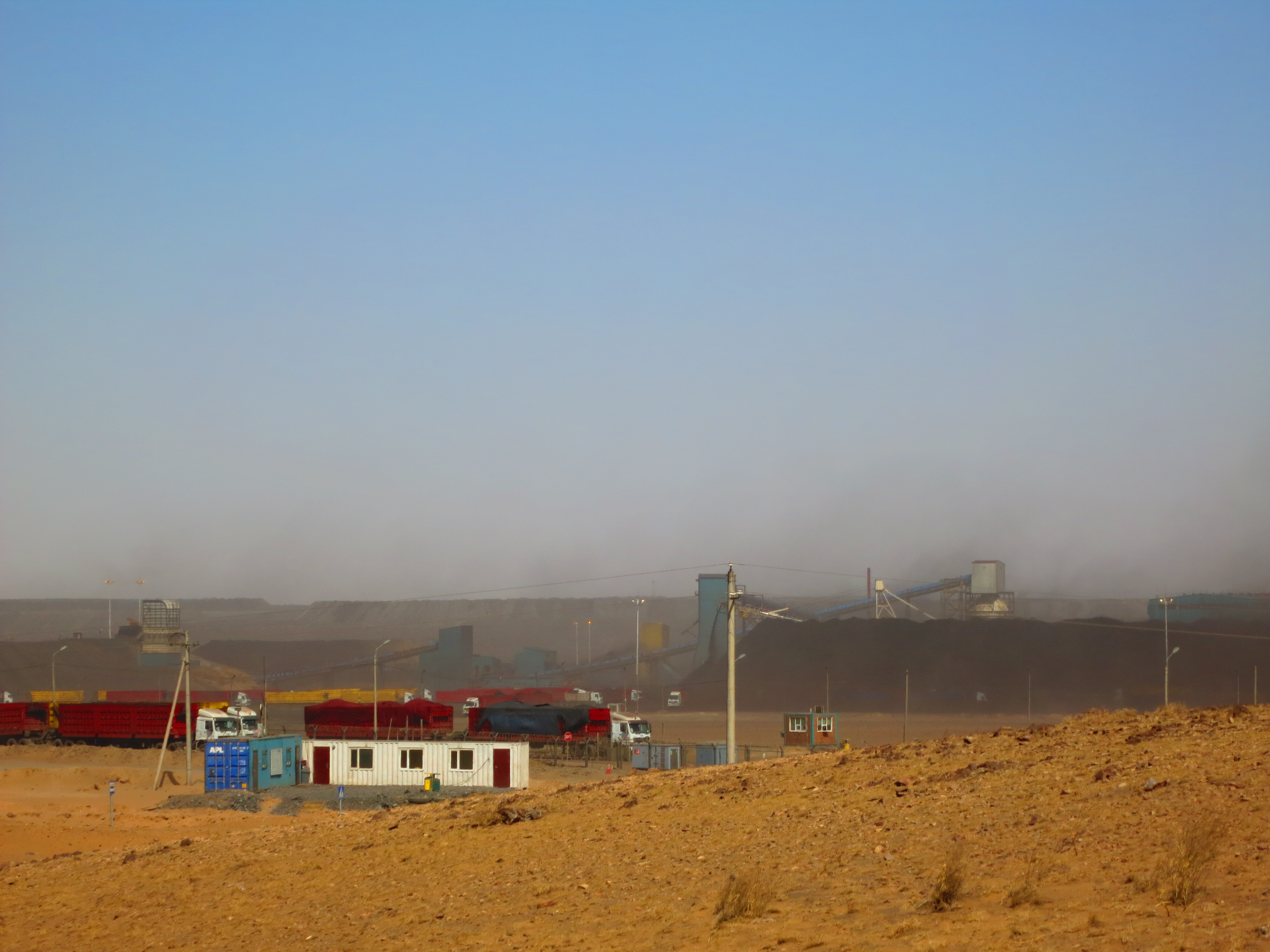
IFC’s Performance Standard 5 is supposed to protect communities from displacement (or fully remediate any harm from displacement), but CAO cases demonstrate how the standard keeps failing communities. Here's what the 2028 reform needs to fix.
TheInternational Finance Corporation (IFC) is in the middle of rewritingPerformance Standard 5 (PS5). This is IFC’s guidance to its clients on how to manage risks related to land acquisition and forced displacement. On paper, PS5 provides minimum requirements for IFC clients to avoid harm to communities and the environment. Avoid displacement where you can. Pay full replacement cost where you can not. Restore livelihoods afterward. The standard covers economic displacement, not just physical relocation, so it includes loss of income or access to land. It is supposed to apply even where people only hold informal land rights. Clients have to write a Resettlement Action Plan and complete an audit showing affected people are at least no worse off than before the project started.
That is how harm is supposed to be avoided or remediated. However, in January 2026,>more than 30 civil society organizations told the IFC that the design of PS5 is incompatible with its stated objective. A few months later,Indigenous-led groups added their own submission on how PS5 interacts with Indigenous Peoples' rights. Neither is arguing that IFC clients are failing to follow the rules (though this does happen regularly; see chart below). They are arguing something more blunt: resettlement, as a practice, rarely works, even when the paperwork is done right. A completion audit does not capture the real costs of food insecurity, psychological trauma, or worse health outcomes. For Indigenous communities especially, threats to cultural continuity is an existential threat that no audit template is built to catch.
This is not hypothetical. Data gathered from the Compliance Advisor/Ombudsman (CAO), the IFC’s own accountability office, reveals significant issues with client implementation of PS5. Across independent accountability mechanisms tracked by Accountability Counsel, displacement-related concerns were cited in 517 complaints. More than 85 of those are connected to IFC-supported projects, and 38% closed without any documented remedy for the people who filed them. With the current rush into transition-mineral mining pushing more projects onto Indigenous and customary land, that number is not expected to go down anytime soon.
Figure 1: Outcome Breakdown for CAO cases involving Displacement Issues, 2000 - 2023
Figure 2: Number of Complaints per Sector for CAO cases involving Displacement, 2000 - 2023
One voice pushing for reform is the Securing Indigenous Peoples' Rights in the Green Economy (SIRGE) Coalition. SIRGE is an Indigenous-led group launched in 2022, with members including Cultural Survival, Earthworks, the Batani Foundation, and Tallgrass Institute. Their submission on PS5 and the related Performance Standard 7, which protects Indigenous Peoples’ rights, put it plainly: "the issue is not whether safeguards exist, but whether they are triggered and applied in a way that meaningfully protects Indigenous Peoples' rights in practice."
Where PS5 Breaks Down
Below are just a few of the significant PS5 design flaws cited by civil society groups:
- The Legitimacy Gap: PS5 treats a government's legal authority to expropriate land as good enough on its own. It does not require the IFC to independently check whether that expropriation is actually justified.
- The Timing Loophole: If displacement happens before a project is formally approved, or shows up through an expansion or an "associated facility," it can dodge PS5 entirely.
- Consultation Loophole: "Engagement" under the current standard usually means informing people, not negotiating with them. Broad community support is only a stated principle, not a hard requirement. That is exactly why the reform push is asking for real negotiated consent instead.
- Burden-shifting in the Audit Language: Completion audits ask communities to "take the opportunity" to restore their own livelihoods. That language quietly moves responsibility off the client and onto the individuals who got displaced in the first place.
- No reach to suppliers. Even when a supplier's land grab is directly tied to an IFC-financed project, PS5 does not touch it.
The below case studies reflect how some of these structural failures within PS5 have led to significant and ongoing harm to communities.
Tata Mundra Ultra Mega Power Plant, India
The Tata Mundra Power Plant is a landmark case which brought to light an important example of improper implementation of PS5 by IFC. In 2008, IFC invested $450 million in a coal-fired power plant on the Gujarat coast, built by Coastal Gujarat Power Limited, a Tata Power subsidiary. Fishing communities and salt pan workers nearby, many from the minority Wagher Muslim community, soon began raising alarms. Construction was cutting off access to the coastal fishing harbors (bunders) they depended on, and polluting the water and farmland around them. In 2011, this became a formal complaint to CAO.
CAO's 2013 investigation supported allegations in the complaint, and its findings pointed to a specific way PS5 could be circumvented. PS5 requires resettlement planning once displacement is identified, but IFC avoided that trigger entirely by labeling the affected settlements "temporary" and the loss of the sand bars "partial." CAO also found that IFC's due diligence fell short of what the project's risk level demanded, and that the communities were never meaningfully consulted.
What followed was over a decade of delay. IFC largely rejected or minimized CAO's findings, and monitoring reports through 2018 kept confirming that nothing had changed on the ground. This led to communities eventually suing in a case that reached the U.S. Supreme Court in 2019. This produced a landmark ruling that IFC does not have absolute immunity from lawsuits, though the underlying claim was later dismissed on other grounds.
CAO finally closed the case in October 2025, acknowledging that the process had been unsatisfactory and that health, livelihood, and environmental concerns remained unresolved. Joe Athialy of the Centre for Financial Accountability called the closure a precedent that rewards IFC for violating its own policy without ever having to fix anything. Throughout the process, IFC continued financing other Tata Group projects, which raises a real question about enforcement of PS5 when IFC chooses to continue investing in repeat offenders, clients found to have violated safeguard standards without remediating harm. While Tata Mundra's compliance findings were made under the 2006 version of PS5, the same weaknesses that led to harm on avoidance and consultation are loopholes that exist in the 2012 standard, and that civil society is pushing to fix.
CBG Bauxite Mine, Guinea
In the case of CBG's bauxite mine expansion in Sangaredi, Guinea, communities accused IFC of not properly implementing PS5, as well as other standards. The communities alleged several instances of non-compliance, including failure to avoid or minimize displacement and failure to provide adequate replacement land or compensation, leading to declining incomes, destroyed water sources, and land that was never rehabilitated or returned. These instances of non-compliance can be viewed as reflecting the broader structural issues related to a legitimacy gap and consultation loophole in the PS5.
Compagnie des Bauxites de Guinée’s (CBG) bauxite mine, in the Sangaredi plateau, is one of the largest open-pit bauxite mines in the world. In 2016, the IFC financed a $200 million expansion of the mine, its processing plant, and related infrastructure, conditioned on environmental and social mitigation plans meant to show PS5 compliance. CBG is 49% owned by the Government of Guinea, and the communities allege that IFC, without proper due diligence, accepted Guinea's uncompensated expropriation of land that families had held under customary rights for hundreds of years. Communities from 13 villages in the Boké region, representing 540 complainants, filed a CAO complaint in 2019 with the support of Inclusive Development International (IDI) and two Guinean organizations, CECIDE and ADREMGUI. In their complaint, communities stated “CBG did not explore feasible options for avoiding economic displacement in consultation with communities. CBG should have consulted affected communities and agreed on options that would allow for communities’ loss of access to land to be temporary and limited.” The lack of a hard requirement for broad community support likely also resulted in missed opportunities for CBG to explore options that would have greatly limited the harm from displacement.
Some agreements have since been reached through CAO's dispute resolution process, including a CBG commitment to compensate for land takings going back to 2016. IDI is also continuing to support negotiators through this process. However, in a satellite imagery analysis commissioned by IDI, it was found that only about 10% of the land CBG mined between 1997 and 2019 has undergone any rehabilitation thus far. This is far below industry standards and indicates that larger impacts are still unresolved.
Recommendations
In order for any reform to be successful, it must go further than restating existing principles more firmly. Civil society’s January 2026 joint submission lays out a vision for how that can happen. Below is a snapshot of some of the recommendations proposed.
- Prohibit forced evictions: Rather than trying to “avoid” them, the updated PS5 should require a human-rights-compliant assessment before IFC accepts any land expropriation as justified. This rigorous assessment should cover both public-interest projects that could justify it and non-public-interest projects that can not.
- Require real negotiated consent: Clients must secure Broad Community Support through equitable negotiations, engage communities before key decisions are made to inform impact-avoidance design, and give communities access to their own independent technical and legal advisors.
- Design projects to avoid displacement: Project footprints should have “no-go zones” to limit community displacement and disruption.
- Properly finance and enforce restoration and remedy: Clients must plan and finance rehabilitation, land return, and benefit-sharing on timeframes negotiated with communities. They should use measures capable of restoring livelihoods and backed by financial leverage like bonds, contingency funds, or withheld disbursements. Communities that request resettlement due to severe impacts should get full PS5 entitlements.
- Close the timing and supply-chain gaps: PS5 should be applied retroactively to displacement caused in anticipation of a project, displacement taken to advance a project and displacement tied to an expansion. Extend PS5 to primary suppliers whose land acquisition is directly linked to an IFC-supported project as well.
Given how common displacement cases are and how serious consequences are for the people living through them, this rewrite is a real opportunity. Tata Mundra and CBG show what's at stake if IFC does not take this seriously. One is a confirmed violation with no remedy, the other a project that stayed inside the standard's own loopholes the whole time. The 2028 rewrite is IFC's chance to close those gaps for good, and it may be the last chance before the transition-mineral rush raises the stakes even higher.